
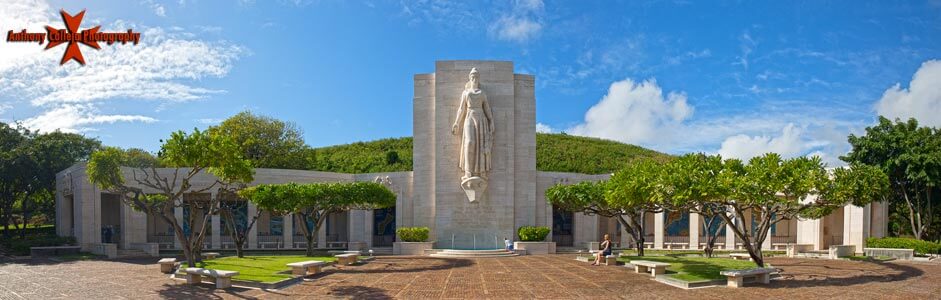
panorama of Punchbowl Cemetery Honolulu Oahu Island Hawaii
TRAVEL PHOTOGRAPHY
See: Travel Photography - Punchbowl National Cemetery - Nisei Soldier Congressional Medal - Iwo Jima Memorial - Oahu Landmarks - King Kamehameha - Diamond Head - Manoa Falls - Lyon Arboretum - Kualoa Sugar Mill - Chinamans Hat Island - Hanauma Bay - Lanai Lookout - Oahu Cliff Jumpers - Kakaako Graffiti Art - Hokulea - Aloha Tower - Oahu Lighthouses - Top Oahu Beaches - Top Places To Take a Selfie in Waikiki

Welcome to the travel photography section of my website, where I invite you to embark on a visual journey across captivating destinations. My name is Anthony Calleja, and I am an editorial photographer based in Kapolei, Hawaii.
My passion for editorial and travel photography traces back to my early years when my family moved back to the beautiful island of Malta, where I learned to appreciate my rich heritage and immerse myself in the diverse cultures that surrounded me.
Growing up in Malta, I delved into the study of art and explored the history of the islands, capturing the essence of the Maltese people and their unique flavors. As the youngest among my 24 siblings, I was constantly exposed to an array of visual experiences that deeply influenced my life's journey and the way I approach photography today.
Through my lens, I strive to capture the essence and beauty of the places I visit, immersing myself in the vibrant cultures, rich histories, and breathtaking landscapes. Each photograph is a testament to the moments that have moved me and left an indelible mark on my soul.
Join me on this visual expedition as we traverse various destinations, from the pristine shores of Hawaii to the charming streets of Europe, and beyond. Let the images transport you to new horizons, igniting a sense of wanderlust and appreciation for the diverse tapestry of our world.
I invite you to explore the travel photography section of my website, where I hope you will find inspiration, awe, and a renewed sense of curiosity about the wonders that await.
OAHU TRAVEL PHOTOGRAPHY
Oahu Photography Galleries
Aloha Tower
Aerial Photography
American Heroes - Japanese American World War II Nisei Soldiers
Birds of Oahu
Chinaman's Hat (Mokolii)
Clouds of Hawaii
Diamond Head
Hawaii Artist Robert Wyland at Work
Hawaii Canoe Races
Hawaii Graffiti Art
Hawaii Plants and Flowers
Hawaii Sea Turtle
Hawaii Trees
Hawaiian Monk Seal
HDR Photography
Hokulea
Honolulu Graffiti Art
Honolulu Sailboat Races
Honolulu Street Art
Hula
Iwo Jima Memorial Kaneohe Marine Corps Base
Kakaako Graffiti Art
King Kamehameha
Little Planet Photography
Lyon Arboretum and Botanical Garden - Oahu's Secret Garden
Oahu Beaches
Oahu Botanical Gardens
Oahu Cliff Jumpers
Oahu Landmarks
Oahu Lifestyle
Things to Do On Oahu
Best Photo Spots In Waikiki
Top Places To Take a Selfie in Waikiki


 Veteran-Owned
 Maltese-Owned
 LGBTQ+ friendly
 Made In America